Chicago, the Windy City, is a vibrant metropolis known for its stunning architecture, deep-dish pizza, and rich cultural history. However, beneath this allure lies a sobering reality: crime statistics that highlight the need for specialized services like crime scene cleanup. In 2023 alone, the Chicago Police Department reported over 617 homicides and thousands of violent crimes, from shootings in high-traffic areas like Rogers Park to assaults in bustling neighborhoods such as Lakeview. These incidents leave behind not just emotional scars but hazardous environments that demand immediate and professional attention.
As a leading provider in the area, Chicago Crime Scene Cleanup understands the gravity of these situations. Our team is dedicated to restoring safety and peace of mind for Chicago residents and businesses affected by crime. In this post, we’ll dive into the latest crime stats, the risks involved, and why entrusting professionals is non-negotiable. Whether you’re dealing with a blood spill removal aftermath or something more complex, read on to learn how proper cleanup can make all the difference.
Understanding Chicago’s Crime Landscape
Chicago’s crime rates have been a topic of national discussion for years, with data from the FBI and local authorities painting a complex picture. According to the 2023 Chicago Crime Dashboard, violent crimes increased by 10% compared to the previous year, including a spike in robberies and aggravated assaults. Neighborhoods like Logan Square saw a 15% uptick in property crimes, while areas near the lakefront, such as Evanston, reported higher incidences of domestic violence leading to tragic outcomes.
Key Statistics from 2023
- Homicides: 617 reported, with many occurring in densely populated districts like the South and West Sides.
- Shootings: Over 2,800 non-fatal shootings, often leaving scenes contaminated with biohazards.
- Burglaries and Thefts: More than 25,000 incidents, contributing to unsecured properties that exacerbate cleanup challenges.
These numbers aren’t just abstract figures—they represent real families in places like Palatine dealing with the aftermath of unattended death remediation. Understanding local trends helps residents prepare, but more importantly, it underscores the urgency of professional intervention to mitigate health risks.
The Hidden Dangers of Crime Scenes
Crime scenes are far more than disarrayed rooms; they’re potential biohazard zones teeming with pathogens, bodily fluids, and chemical residues. In Chicago’s humid climate, decomposition can accelerate, leading to foul odors and mold growth that linger for weeks if not addressed properly.
Health Risks Involved
Exposure to bloodborne pathogens like hepatitis B, HIV, and even MRSA bacteria poses severe threats. A single untreated spill in a home in Rogers Park could infect multiple people, especially in multi-unit buildings common in the city. Moreover, the psychological toll of handling such scenes without training can lead to secondary trauma, which is why experts recommend leaving it to certified professionals.
Our odor elimination treatment services are designed to tackle these issues head-on, using advanced techniques to neutralize contaminants at the molecular level. Ignoring these dangers isn’t just risky—it’s irresponsible in a city where first responders are already stretched thin.
Why DIY Cleanup Isn’t Enough
It’s tempting to grab gloves and cleaners after an incident, but DIY efforts often fall short and can worsen the situation. Standard household products don’t neutralize biohazards; they merely mask them, allowing bacteria to thrive.
Common Mistakes to Avoid
- Inadequate Protection: Without proper PPE, you’re exposing yourself to airborne particles.
- Improper Disposal: Chicago’s waste regulations require special handling for biohazards—mixing them with regular trash can lead to fines up to $1,000.
- Lingering Pathogens: Surface cleaning misses porous materials like carpets, where fluids seep deep.
In neighborhoods like Lakeview, where apartments are tightly packed, one mishandled cleanup can affect entire buildings. Instead, opt for pros who follow OSHA and EPA guidelines to ensure thorough decontamination.
Benefits of Professional Crime Scene Cleanup
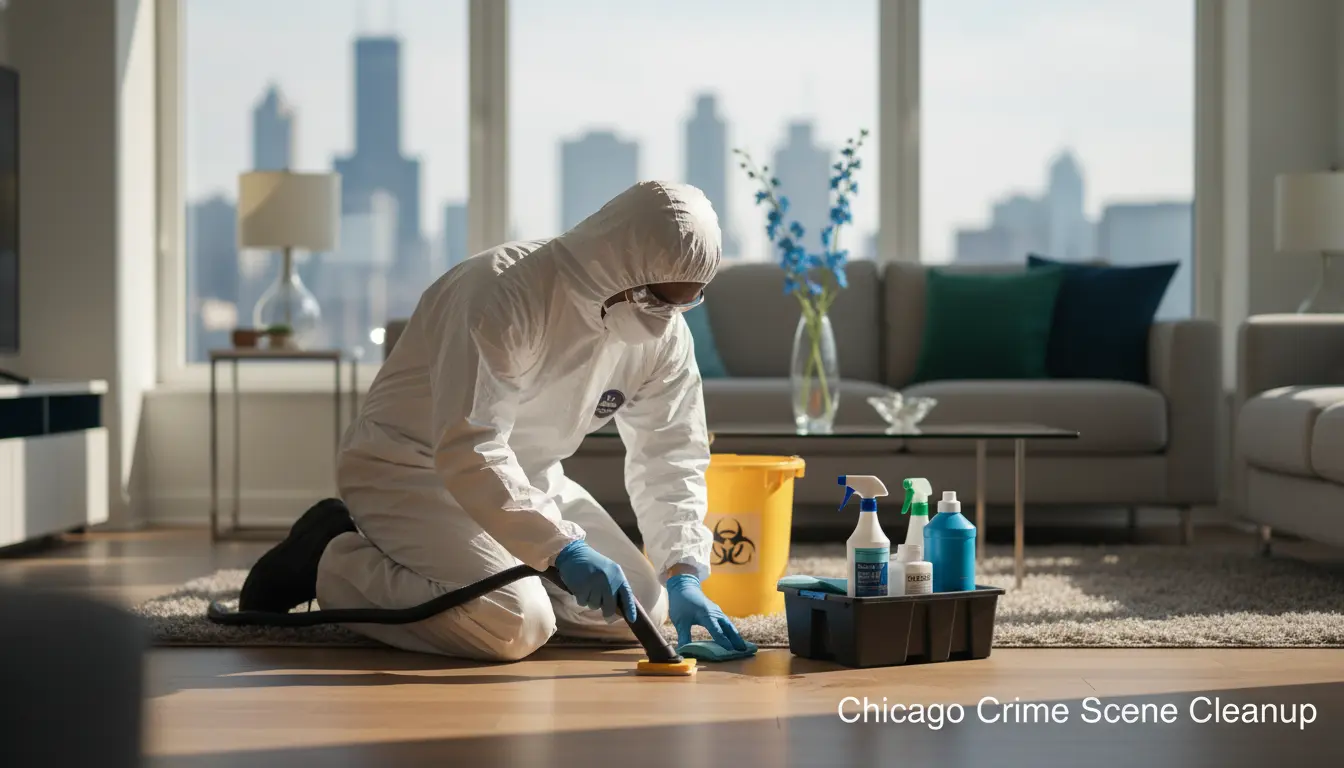
Hiring experts like Chicago Crime Scene Cleanup brings peace of mind through efficiency, safety, and compliance. We arrive 24/7, equipped with industrial-grade tools to handle everything from suicide scene cleanup to larger-scale operations.
Speed and Thoroughness
Professionals complete jobs in hours what might take amateurs days, minimizing disruption. In high-crime areas like Logan Square, quick response times prevent further complications, such as attracting pests or violating health codes.
Cost-Effectiveness in the Long Run
While initial costs seem high, avoiding health issues or property damage saves thousands. Insurance often covers these services, especially in Chicago where policies increasingly include biohazard riders.
Our team has served communities across the city, from the suburbs of Palatine to urban cores, ensuring every scene is restored to pre-incident condition.
Chicago-Specific Considerations
The city’s diverse geography—from the high-rises of downtown to the family homes in Evanston—means cleanup challenges vary. Winter’s freeze-thaw cycles can preserve contaminants longer, while summer heat speeds decomposition.
Navigating Local Regulations
Chicago mandates that crime scenes be cleared by licensed professionals before reoccupation. In areas like Rogers Park, proximity to Lake Michigan adds moisture-related mold risks, requiring specialized accident scene decontamination.
We tailor our approach to these factors, coordinating with CPD and local health departments for seamless service.
Practical Tips for After a Crime Incident
While professionals should handle the bulk, here are actionable steps to take immediately:
-
Secure the Area: Cordon off the scene to prevent accidental entry. In Chicago’s busy streets, this is crucial to avoid tampering.
-
Contact Authorities First: Report to 911 and wait for clearance before any cleanup attempts.
-
Document Everything: Take photos for insurance, but avoid touching anything.
-
Call Professionals Promptly: Reach out to Chicago Crime Scene Cleanup at (312) 675-2627 for rapid response. Delaying can lead to irreversible damage.
-
Prepare for Emotional Support: Link up with local resources like the Chicago Crisis Response Team while we handle the physical cleanup.
These tips empower you during a tough time, especially in close-knit communities like those in Evanston.
FAQ: Common Questions About Crime Scene Cleanup in Chicago
1. How quickly can Chicago Crime Scene Cleanup respond?
We offer 24/7 emergency services, arriving within 1-2 hours anywhere in the city, from Logan Square to Palatine.
2. Is professional cleanup covered by insurance?
Yes, most homeowners and renters insurance policies in Illinois cover biohazard cleanup. We’ll assist with claims.
3. What makes your services different for Chicago areas?
Our local expertise accounts for urban density and weather, ensuring compliant and efficient work tailored to neighborhoods like Lakeview.
4. Do you handle unattended deaths?
Absolutely—our unattended death remediation includes odor control and full sanitization.
5. Are there health risks if I try to clean it myself?
Significant risks, including exposure to pathogens. Always hire certified pros to avoid legal and health issues.
Conclusion: Take the First Step Toward Recovery
Chicago’s crime stats remind us of the city’s challenges, but they also highlight the importance of reliable support systems. Professional cleanup isn’t just about tidying up—it’s about reclaiming safety, health, and normalcy for those affected. At Chicago Crime Scene Cleanup, we’re committed to serving our community with compassion and expertise.
Don’t let a crime scene linger. Contact us today at (312) 675-2627 for a free consultation and let our team handle the rest. Whether in Rogers Park or beyond, we’re here to help you move forward.