Dealing with a biohazard situation can be overwhelming, especially in a bustling city like Chicago where unexpected incidents happen daily. Whether it’s the aftermath of a crime scene, an accident, or unattended death, biohazard cleanup requires specialized knowledge and equipment to ensure safety and compliance. As your trusted partner, Chicago Crime Scene Cleanup is here to guide you through the process. In this comprehensive guide, we’ll cover everything from understanding biohazards to navigating Illinois regulations, with practical tips tailored for Chicago residents and businesses. If you’re facing such a situation in areas like Hyde Park or Pilsen, know that professional help is just a call away at (312) 675-2627.
What is Biohazard Cleanup?
Biohazard cleanup involves the safe removal, decontamination, and disposal of hazardous materials that pose risks to human health and the environment. These materials include blood, bodily fluids, bacteria, viruses, and other pathogens often found in crime scenes, medical emergencies, or hoarding situations. Unlike regular cleaning, biohazard remediation demands adherence to strict protocols to prevent the spread of infectious diseases.
In Illinois, biohazards are regulated under state and federal guidelines, including OSHA standards and EPA rules. For Chicago residents, this means that improper handling can lead to legal liabilities and health risks. Our team at Chicago Crime Scene Cleanup uses certified techniques to restore properties to safe, habitable conditions.
Common Types of Biohazards in Chicago
Chicago’s urban environment exposes residents to various biohazards. From violent crimes in high-density neighborhoods like Wicker Park to traffic accidents on busy expressways, the need for prompt cleanup is critical. Key types include:
- Blood and Bodily Fluids: Often resulting from injuries or suicides. Our blood spill removal services ensure thorough disinfection.
- Pathogenic Waste: Such as from infectious diseases, requiring specialized infectious waste disposal.
- Decomposition Residues: In cases of unattended deaths, where odors and biofluids permeate surfaces.
Understanding these helps in identifying when to call professionals rather than attempting DIY cleanup, which can be dangerous.
Legal Requirements for Biohazard Cleanup in Illinois
Illinois has stringent laws governing biohazard handling to protect public health. The Illinois Environmental Protection Agency (IEPA) oversees waste disposal, while the Department of Public Health regulates infectious materials. Property owners must ensure that cleanup complies with these to avoid fines up to $25,000 per violation.
Key Regulations to Know
- Licensing and Certification: Only trained professionals can handle biohazards. Chicago Crime Scene Cleanup holds all necessary certifications, including OSHA bloodborne pathogen training.
- Waste Disposal Protocols: Biohazardous waste must be transported in sealed containers to approved facilities. In Chicago, this often involves coordination with local landfills like those in nearby Des Plaines.
- Reporting Requirements: For crime-related scenes, law enforcement involvement may require documentation. We assist with paperwork to streamline the process.
Failure to comply can result in property condemnation or health department interventions. Always prioritize certified services to stay on the right side of the law.
The Biohazard Cleanup Process: Step by Step
Professional biohazard cleanup follows a systematic approach to ensure safety and thoroughness. Here’s how Chicago Crime Scene Cleanup handles it:
Step 1: Assessment and Safety Perimeter
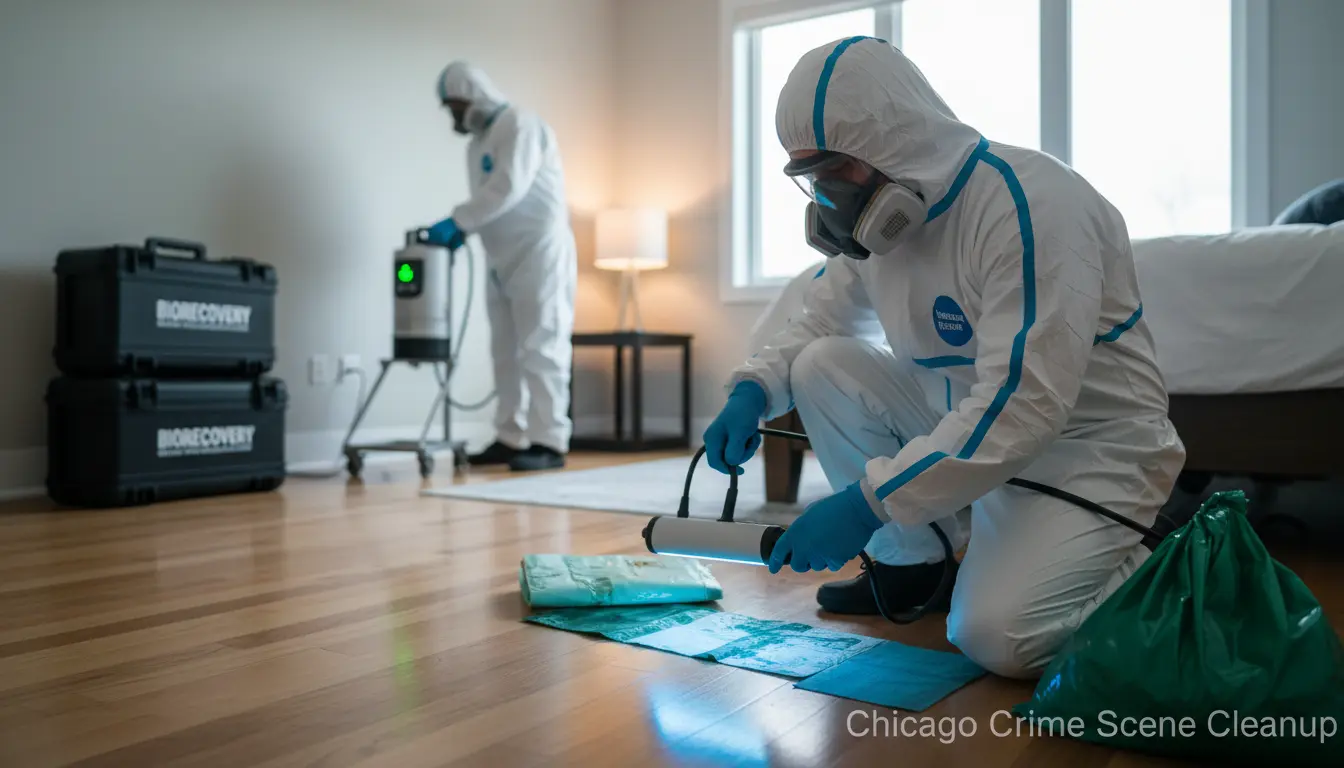
Upon arrival, our technicians assess the scene to identify hazards. We establish a safety perimeter, using PPE like hazmat suits, gloves, and respirators. In Chicago’s variable weather, this step is crucial to prevent cross-contamination.
Step 2: Containment and Removal
We contain the area with barriers and remove gross contaminants. For instance, in accident scene decontamination, we use absorbent materials to soak up fluids before extraction.
Step 3: Disinfection and Deodorization
Surfaces are cleaned with hospital-grade disinfectants effective against pathogens like HIV, hepatitis, and MRSA. HEPA vacuums and ozone generators tackle odors, especially in decomposition cases via our decomposition cleanup process.
Step 4: Waste Disposal and Final Inspection
All waste is double-bagged and disposed of at licensed facilities. A final walkthrough verifies the site’s safety, often with ATP testing for microbial residues.
This process typically takes 4-8 hours, depending on the scene’s severity, and we work discreetly to respect your privacy.
Practical Tips for Biohazard Situations in Chicago
While professionals should handle cleanup, knowing initial steps can mitigate risks:
- Secure the Area: Immediately cordon off the site to prevent exposure. In Chicago apartments, notify building management promptly.
- Avoid Contact: Do not touch biohazards with bare hands. Use gloves if you must move items, but evacuate if possible.
- Ventilate: Open windows for airflow, but only after assessing airborne risks.
- Document for Insurance: Take photos from a safe distance for claims. Many Chicago insurers cover biohazard cleanup under property policies.
For suicide scenes, which are unfortunately common in urban areas, seek emotional support alongside cleanup. Our suicide scene cleanup services include compassionate handling.
If you’re in a suburb like Mount Prospect, response times may vary, so call us at (312) 675-2627 for 24/7 emergency service.
Health Risks of Improper Biohazard Cleanup
Neglecting proper cleanup can lead to serious health issues. Pathogens can survive on surfaces for days or weeks, causing infections, allergic reactions, or long-term illnesses. In humid Chicago summers, mold growth exacerbates problems post-water exposure in biohazards.
Children and pets are particularly vulnerable, so swift action is essential. Studies from the CDC highlight that improper handling contributes to community health outbreaks, underscoring the need for experts like Chicago Crime Scene Cleanup.
Choosing the Right Biohazard Cleanup Company in Illinois
Not all companies are equal. Look for:
- Experience: Years in the field, especially with Chicago-specific challenges like high-rise access.
- Insurance and Bonding: To protect against damages.
- 24/7 Availability: Incidents don’t wait for business hours.
Chicago Crime Scene Cleanup stands out with over a decade of service, serving from the Loop to outer neighborhoods. Our eco-friendly methods align with Illinois’ sustainability goals.
FAQ: Common Questions About Biohazard Cleanup in Illinois
1. How much does biohazard cleanup cost in Chicago?
Costs vary by scene size and complexity, ranging from $500 for small spills to $5,000+ for full rooms. We provide free estimates—call (312) 675-2627.
2. Is biohazard cleanup covered by insurance?
Often yes, under homeowners or commercial policies for covered perils. We assist with claims to maximize coverage.
3. How long does the cleanup take?
Most jobs are completed in one day, but severe cases like hoarding may require multiple visits.
4. Do I need to vacate my home during cleanup?
Yes, for safety. We work quickly to minimize disruption.
5. What if it’s a rental property in Illinois?
Landlords are responsible under state law. We coordinate with tenants and owners for seamless service.
Conclusion: Restore Safety with Chicago Crime Scene Cleanup
Biohazard cleanup in Illinois doesn’t have to be a nightmare. With the right knowledge and professional support, you can restore your property and peace of mind. From the streets of Chicago to surrounding areas, Chicago Crime Scene Cleanup is committed to compassionate, efficient service. Don’t risk your health—contact us today at (312) 675-2627 for immediate assistance. Let us handle the hazards so you can focus on healing.