Imagine returning home to a loved one’s apartment in bustling Wicker Park, only to discover they’ve passed away unnoticed for days. The scene is heartbreaking—and hazardous. Unattended deaths, where a body decomposes without immediate discovery, pose unique challenges that go far beyond emotional grief. In Chicago’s dense urban landscape, these tragedies happen more often than you might think. As experts at Chicago Crime Scene Cleanup, we’ve seen the stark realities firsthand. This post dives into shocking facts about unattended death cleanup services, revealing why professional intervention is crucial for safety and restoration.
Whether you’re a property manager in Logan Square or a family member in Lakeview, understanding these facts can prepare you for the unexpected. We’ll explore the science, risks, and steps involved, with practical advice tailored to Chicago’s neighborhoods.
What Exactly is an Unattended Death?
An unattended death occurs when someone passes away alone, and their body isn’t found for an extended period—often days, weeks, or even months. This delay leads to decomposition, turning a tragic loss into a biohazard nightmare.
Why Unattended Deaths Are Rising in Chicago
Chicago’s aging population and isolated living situations contribute to this issue. In neighborhoods like Pilsen, where many residents live in small apartments or alone, social isolation can delay discovery. According to local health reports, unattended deaths have increased by 20% in urban areas over the past decade. Factors like remote work and the lingering effects of the pandemic exacerbate the problem, leaving vulnerable individuals unchecked.
Shocking fact: In a city as vibrant as Chicago, over 1,000 unattended deaths are reported annually, many in high-rises where odors might go unnoticed amid the urban hum.
The Gruesome Science of Decomposition
Decomposition isn’t just unpleasant—it’s a biological process that releases fluids, gases, and bacteria, contaminating everything it touches.
Stages of Decay and Their Impact
Within hours, autolysis begins, breaking down cells. By day two, putrefaction sets in, producing foul odors and attracting insects. In Chicago’s humid summers, this accelerates, leading to black putrefaction by week one, where the body liquifies.
Shocking fact: Decomposition fluids can seep into floors, walls, and HVAC systems, spreading contaminants up to 50 feet away. In a Skokie condo, we’ve cleaned scenes where the damage extended to neighboring units, requiring full structural remediation.
These fluids contain pathogens like Salmonella and E. coli, making DIY cleanup not just ineffective but dangerous.
Hidden Health Risks You Can’t Ignore
Beyond the visible mess, unattended death scenes harbor invisible threats that can endanger anyone who enters.
Biohazards and Long-Term Dangers
Exposure to bloodborne pathogens, such as hepatitis and HIV, is a primary concern. Airborne spores from mold growth in damp residues can trigger respiratory issues, especially in Chicago’s allergy-prone seasons.
Shocking fact: Without proper biohazard cleanup services, survivors face a 30% higher risk of secondary infections. In one Lakeview case, family members suffered severe allergic reactions weeks after exposure due to overlooked contaminants.
Mental health impacts are equally shocking—trauma from these scenes can lead to PTSD if not handled sensitively by professionals.
Why DIY Cleanup is a Recipe for Disaster
You might think gloves and bleach suffice, but that’s a myth that could cost you dearly.
Common Mistakes and Their Consequences
Amateurs often underestimate the absorbency of porous materials like carpets, which trap biohazards indefinitely. In Chicago’s older homes in Logan Square, wood floors can warp and harbor bacteria if not treated correctly.
Shocking fact: Improper cleanup can lead to legal liabilities; property owners in Illinois face fines up to $10,000 for health code violations related to biohazards.
Instead, opt for certified experts who follow OSHA and EPA guidelines.
The Professional Cleanup Process Demystified
At Chicago Crime Scene Cleanup, our unattended death remediation process is thorough and compassionate, minimizing disruption.
Step-by-Step: From Assessment to Restoration
-
Secure the Scene: We arrive 24/7, cordon off the area, and coordinate with Chicago PD if needed.
-
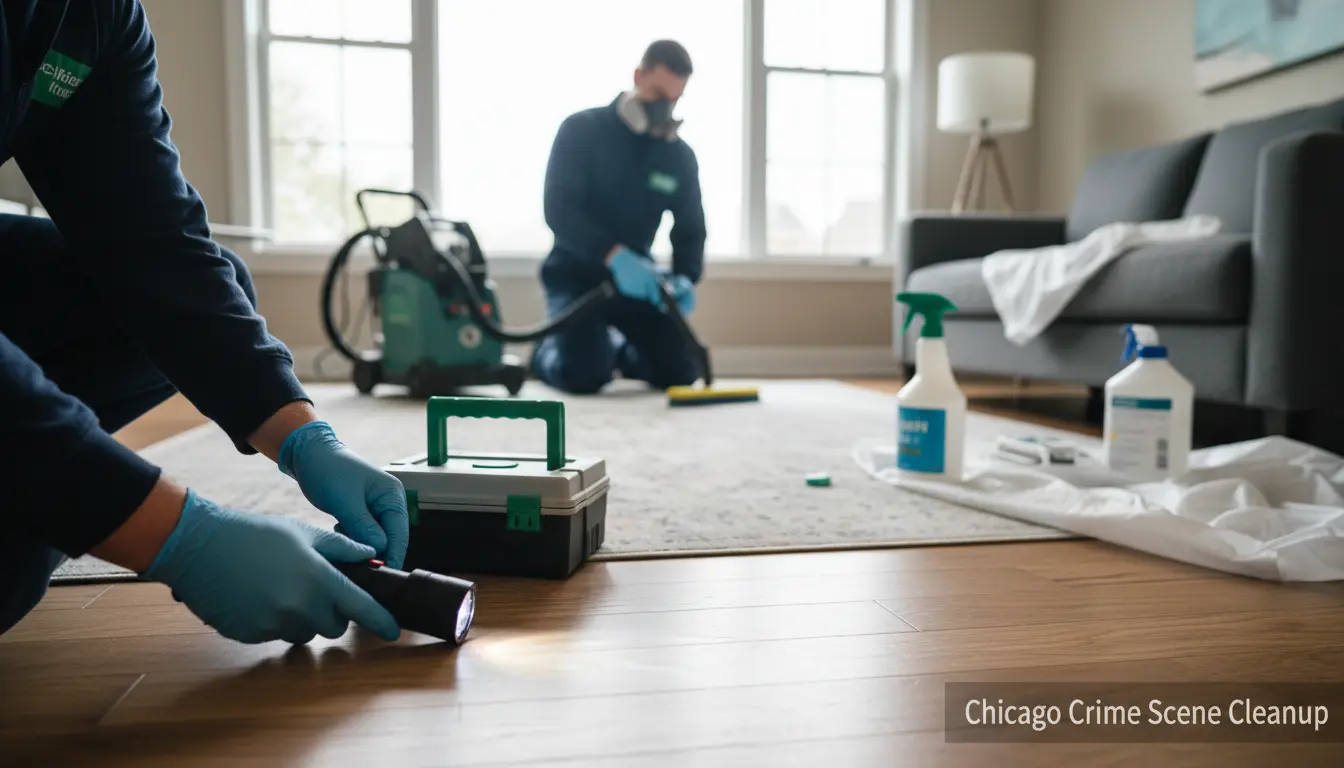
Biohazard Removal: Using PPE and specialized tools, we extract fluids and tissues, disposing of waste per regulations.
-
Deep Sanitization: Trauma scene sanitization involves hospital-grade disinfectants to eliminate 99.99% of pathogens.
-
Odor Neutralization: Our odor elimination treatment uses ozone and enzymes to banish smells that linger for months.
-
Restoration: We repair or replace damaged items, returning the space to pre-incident condition.
In Wicker Park’s trendy lofts, where space is premium, our discreet approach ensures neighbors remain unaware.
Shocking fact: Professional services reduce cleanup time from weeks to days, preventing further property devaluation—crucial in Chicago’s competitive real estate market.
Practical Tips for Chicago Residents and Property Managers
Prevention and preparation can make all the difference in high-risk areas like Pilsen or Skokie.
Actionable Advice to Stay Safe
-
Install Monitoring Systems: Smart home devices with fall detection can alert authorities early. In Logan Square’s family homes, these have saved lives by prompting welfare checks.
-
Foster Community Connections: Encourage neighborly check-ins, especially for seniors in Lakeview high-rises.
-
Know Your Rights: Illinois law requires landlords to handle biohazards promptly. If managing properties in Wicker Park, document everything and call pros immediately.
-
Emergency Kit Essentials: Keep PPE, but remember—it’s no substitute for forensic cleaning expertise. Stock gloves, masks, and tarps, but prioritize professional help.
-
Insurance Check: Many Chicago homeowners’ policies cover biohazard cleanup—review yours today.
For property managers in dense neighborhoods like Pilsen, regular maintenance reduces hidden risks from past incidents.
FAQ: Common Questions About Unattended Death Cleanup
1. How long does unattended death cleanup take in Chicago?
It varies by scene severity, but our team typically completes most jobs in 3-5 days, including restoration. In urban spots like Skokie, we work efficiently to avoid disruptions.
2. Is unattended death cleanup covered by insurance?
Often yes—homeowners, renters, and commercial policies may include it under biohazard or trauma coverage. Contact your provider and Chicago Crime Scene Cleanup for assistance claims.
3. What if the death occurred in a rental property in Logan Square?
Landlords must ensure safe conditions per Chicago ordinances. We handle tenant evictions sensitively and restore units quickly to minimize vacancy losses.
4. Are there health risks after cleanup?
Our protocols eliminate nearly all hazards, but air out the space and monitor for sensitivities. In humid Chicago summers, follow up with dehumidifiers.
5. How discreet is the service in busy areas like Lakeview?
We use unmarked vehicles and plain uniforms to maintain privacy, respecting Chicago’s community vibe.
Conclusion: Don’t Face This Alone—Call the Experts Today
Unattended death cleanup reveals shocking truths about hidden dangers in our daily lives, from decomposition’s rapid spread to long-term health threats. In Chicago’s vibrant yet vulnerable neighborhoods, professional help isn’t optional—it’s essential for safety and peace of mind.
Chicago Crime Scene Cleanup is here 24/7, serving areas from Pilsen to Wicker Park with compassion and expertise. If you’re dealing with an unattended death or suspect one, act fast to protect your health and home. Call us at (312) 675-2627 for immediate, confidential assistance. Let us handle the horror so you can focus on healing.